As of today, 1 October 2026, right to work changes for construction are now in force in the UK, and the change reaches further than most sectors.
For years, liability under the right to work regime has hinged on proving a direct employer-employee relationship. As sub-contracting and self-employed labour have grown across construction, that's made the rules easier to work around. From today, responsibility widens beyond direct employees to cover sub-contractors, agency workers and anyone a business engages, and liability widens too, reaching further up the contracting chain than before.
For a sector built on multi-tier sub-contracting, that's not a small adjustment.
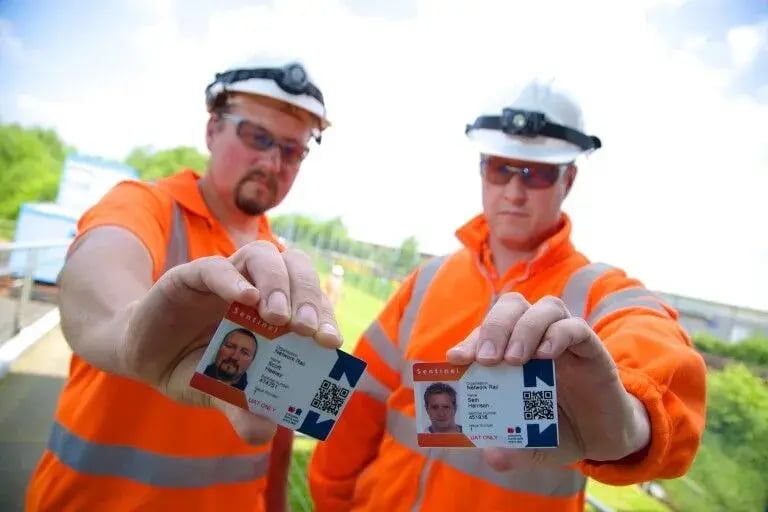
Home Office guidance points to practical systems — site passes, attendance records, biometric checks and regular re-verification — as the kind of controls that help businesses evidence this across the whole chain, not just at the point someone is first engaged.
Key takeaways
- Right to work changes came into force in the UK on 1 October 2026
- Liability now extends beyond direct employees to sub-contractors and agency workers
- A main contractor can be held liable for a sub-contractor's worker
- End clients buying work for their own use are not liable
- Civil penalties have risen to up to £60,000 per worker for repeat breaches
- A "self-employed" label doesn't remove liability if the real relationship differs
In short: right to work rules for construction changed today, and liability now reaches across the whole labour supply chain, not just direct employees. Get in touch to find out how CausewayOne gives you visibility across your full supply chain, helps you evidence right to work competency and much more.
Read on for more on who's actually liable, what the fines look like, and what to do now.
Two things changed under the new October 2026 right to work rules
The change was introduced through the Border Security, Asylum and Immigration Act 2025, alongside the Home Office's draft Code of Practice on Preventing Illegal Working. Unlike previous updates to the right to work regime, which mostly adjusted guidance, this is a change to the underlying legislation itself, and it's now in effect.
Two things have shifted at once. Responsibility for right to work checks now extends beyond direct employees to cover sub-contractors, agency and casual workers, those on worker contracts, and anyone a business brings onto a site. Liability has widened too: where a business engages a sub-contractor who in turn uses further layers of labour, that liability can now reach further up the chain than it could before.
The shape of this chain is where an end client purchasing work for its own use sits outside the extended liability rules, but every link above the worker — the sub-contractor and the main contractor — can now be held liable depending on how the arrangement operates in practice.
Multi-tier sub-contracting leaves construction more exposed to right to work risk than other sectors
Construction isn't the only sector affected, but it's more exposed than most. Workers typically arrive on site through several layers of contractors, sub-contractors, labour suppliers and agencies, and that depth is exactly where oversight tends to slip.
A principal contractor appoints a specialist sub-contractor, who uses labour-only sub-contractors or agency workers, who in turn engage self-employed tradespeople, and by the time a worker is on site, the chain above them can be several links long.
Extended liability
In practice, extended liability now touches almost everyone in the chain.
If a sub-contractor's worker turns out not to have the right to work, liability can sit with that sub-contractor, the main contractor, or both, depending on the specific contractual arrangement and how it operates in practice.
The one clear exception is the end client: a business purchasing work or services for its own use, rather than supplying it onward, falls outside the extended liability provisions.
Self-employment status doesn't settle the right to work question
What matters is the reality of the working arrangement, not the label attached to it. A contract that describes someone as self-employed doesn't settle the question if the Home Office assesses the actual relationship differently after the fact.
That said, the changes aren't intended to capture genuinely self-employed people running their own business and contracting directly with their own clients — a self-employed electrician or surveyor working for themselves, for example. The harder cases sit with labour-only sub-contracting and agency-style arrangements, which are common across construction and worth reviewing specifically.
Civil penalties for right to work breaches rise to £60,000 per worker under the new rules
The headline numbers are substantial on their own.
Under the updated Home Office penalty framework, civil penalties have risen from a cap of £20,000 per worker to £45,000 for a first breach and £60,000 for repeat breaches, meaning a single multi-worker breach can run into hundreds of thousands of pounds.
But the cost doesn't stop at the fine:
- Business disruption. A penalty large enough to affect a business's financial position can delay delivery on other projects, trigger re-tendering, or activate client-side penalty clauses — costs that can exceed the original fine itself
- Criminal liability. In serious cases, illegal working that's knowingly facilitated can carry an unlimited fine and up to five years' imprisonment
- Sponsor licence risk. Sponsor licence holders risk suspension or revocation, putting every sponsored worker's visa at risk
- Reputational damage. Enforcement action is increasingly made public, adding a reputational cost alongside the financial one
Construction businesses should also be aware that the Fair Work Agency, a newer enforcement body focused on labour exploitation, is now auditing pay and vetting practices alongside the Home Office — a separate layer of scrutiny worth having on the radar alongside the right to work regime itself.
What construction should do now
- Map the labour supply chain. Know exactly who is carrying out work across every project, and how each person has been engaged
- Review and update sub-contract terms. Build the required compliance clauses into any contract entered into from today onwards
- Build check-before-start processes for substitution. No substitute should set foot on site before their right to work has been verified
- Train beyond HR. Commercial teams negotiating contracts, procurement teams appointing labour suppliers, and site managers controlling access all need to understand where responsibility sits
- Confirm identity on site, not just on paper. Make sure the process verifies that the individual working is the same individual who was checked
Supply chain visibility matters more than ever - and Causeway can help
This is, first and foremost, a legal and contractual issue. Getting sub-contract terms right, understanding where liability actually sits, and taking proper advice matters more than any single piece of technology. But the hardest part of the new rules is exactly where oversight tends to slip: across the layers of sub-contractors, agency workers and self-employed tradespeople who make up a typical site, not just a business's own direct employees.
Home Office guidance points to practical systems — site passes, attendance records, biometric checks and regular re-verification — as the kind of controls that help businesses evidence this across the whole chain, not just at the point someone is first engaged.
Causeway's workforce management solutions gives visibility of your full supply chain coming to site, not just your own workforce, and stores the right to work competency once a check is completed alongside health and safety, induction, briefings and other required competencies giving businesses a reliable, auditable record across every tier, not just the one they directly engage.
Get in touch to find out how CausewayOne gives you visibility across your full supply chain, helps you evidence right to work competency and much more.
A right to work check is the process an employer or engager uses to confirm someone is legally entitled to work in the UK before they start. It typically means checking original identity and immigration status documents, or using the Home Office's online checking service, and keeping a record of what was checked and when.
The Fair Work Agency is a newer enforcement body set up to tackle labour exploitation. It now audits pay and vetting practices alongside the Home Office, adding a separate layer of scrutiny for construction businesses on top of the right to work regime itself. It's worth construction employers knowing it exists, even though it isn't the body enforcing these particular changes.
The changes came into force on 1 October 2026, introduced through the Border Security, Asylum and Immigration Act 2025 alongside the Home Office's draft Code of Practice on Preventing Illegal Working. Unlike earlier updates, which mostly adjusted guidance, this is a change to the underlying legislation, and it applies from that date onwards.
For construction, the new rules mean liability can no longer be contained to a business's own payroll. Responsibility for right to work checks now extends to subcontractors, agency and casual workers, and anyone engaged through the supply chain, and a main contractor can be held liable for a sub-contractor's worker further down the chain. The one exception is an end client buying work for its own use. In practice, that means reviewing sub-contract terms, checking substitutes before they start work, and treating compliance as a whole-chain responsibility rather than something that stops at direct employees.