A single, map-based digital standard for traffic regulation orders is on its way, and the funding to help authorities prepare has been confirmed. For many councils, the question is no longer whether to act, but where to start.
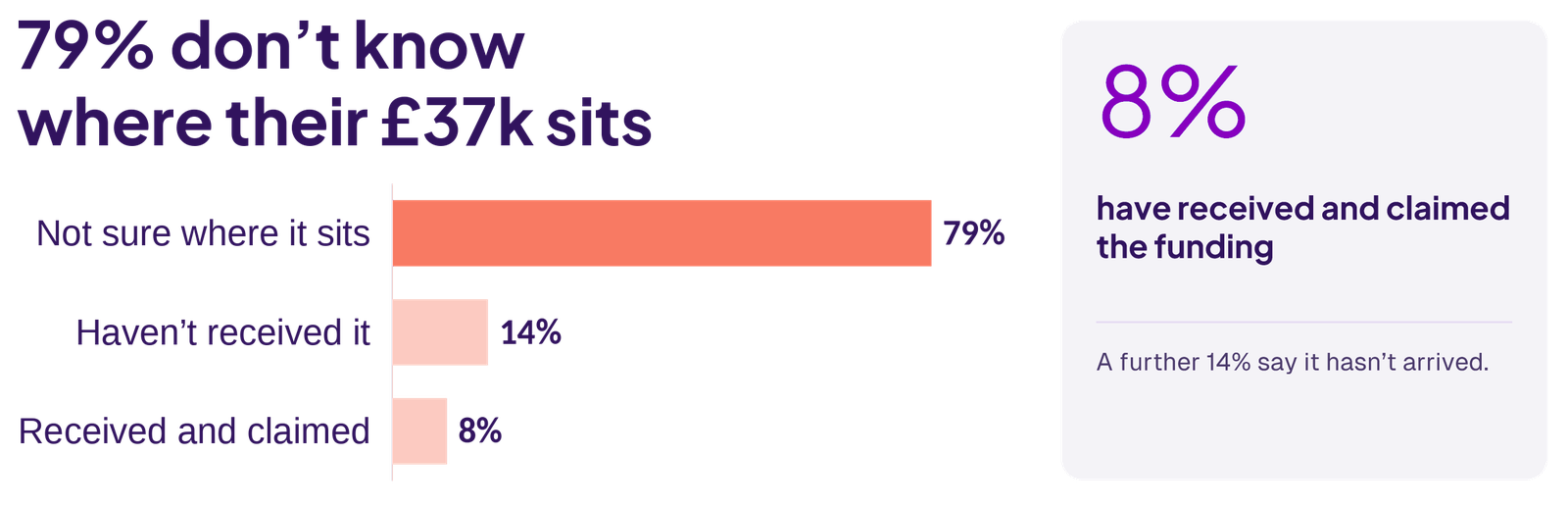
Where is your £37,000 New Burdens funding? Source: live poll, New Burdens, New Funding webinar, 5 November 2026.
As a partner to highways authorities across the whole life cycle of their orders, Causeway recently ran a webinar unpacking what the latest D-TRO update means for local authorities, featuring a product lead for traffic regulation orders and the head of TRO consultancy operations, both of whom work directly with authorities on this transition.
Featuring:
-
Adrian Hull, Product Lead, Traffic Regulation Orders, Causeway
- Kevin Mather, Head of TRO Consultancy Operations, Causeway
The webinar covered what’s changing and why the timing matters, what the funding and backlog mean in practice, and a three-phase approach that turns D-TRO from a potential panic into a plan. Watch the full recording here. If you would rather start with your own position, take the D-TRO Readiness Check first.
Key takeaways
-
D-TRO is foundation work, not a compliance checkbox. A clean dataset published once feeds sat navs, parking apps, enforcement and, in time, autonomous vehicles.
-
Temporary orders are in scope. Section 14 orders and notices sit alongside permanent orders in the powers behind D-TRO.
-
The timeline is not locked. Regulations are expected around February 2027, with at least 12 weeks' notice once they are laid. Go-live is about new orders, not converting everything at once.
-
The standard is still moving. Version four changed conditions, version five is coming, and requirements are expected to grow.
-
Partnership matters. We sit on both sides of the journey, working with DfT on the standard and supporting authorities through the transition.
-
The £37,000 of New Burdens funding is confirmed. London boroughs receive it by a different route, not later by default.
-
"Backlog" means orders that are not digital, not orders that are out of date. Prioritise by evidence, schemes and political commitments.
- Evidence, plan, maintain. Name an owner, plan cover for key staff and treat D-TRO as a repeating cycle, not a one-off fix.
What is changing, and why it goes beyond compliance
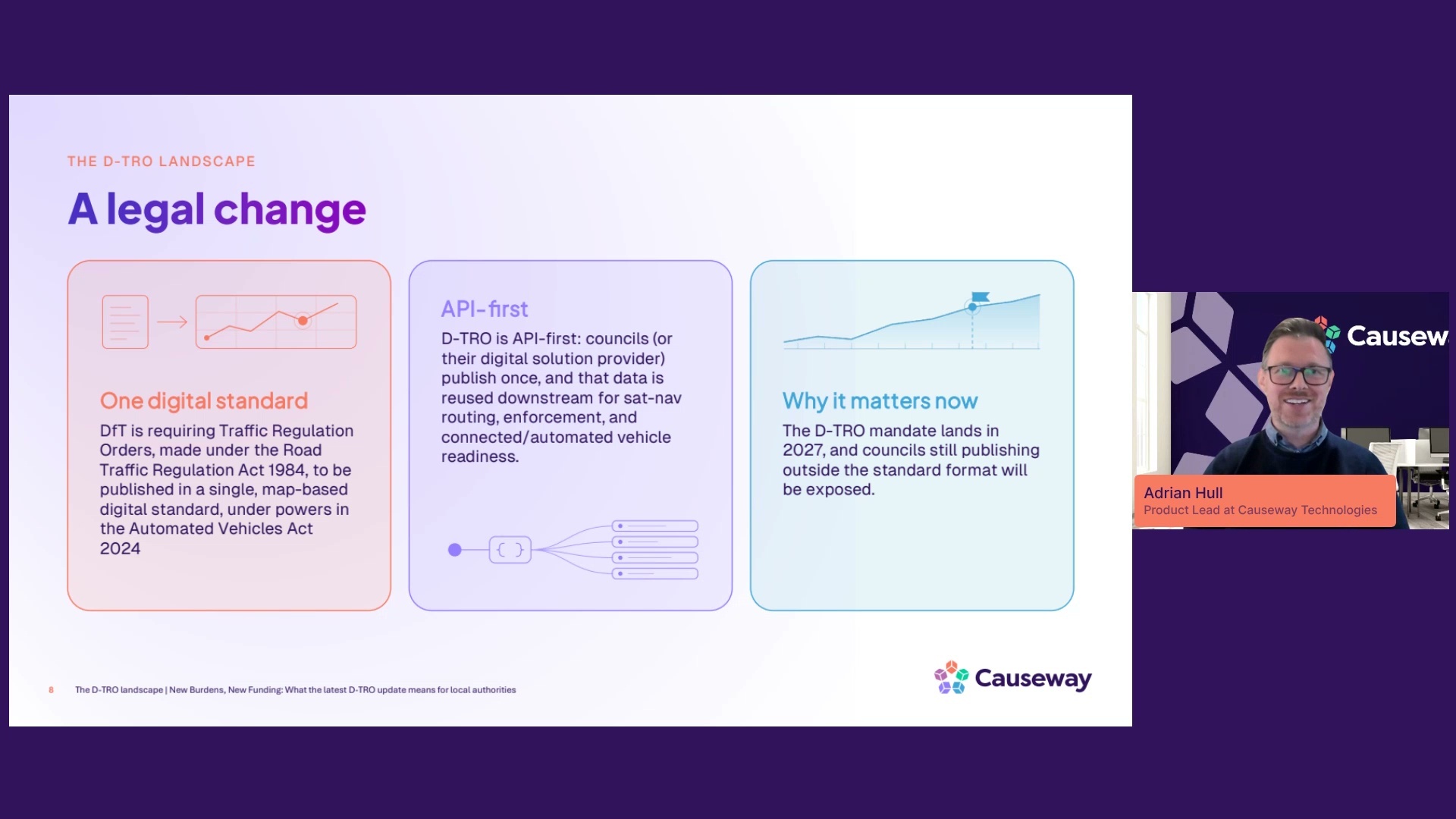
Adrian Hull, Product Lead, Traffic Regulation Orders, explains the legal change behind D-TRO at the New Burdens, New Funding webinar, 5 November 2026.
The Department for Transport (DfT) will require all permanent and temporary traffic regulation orders to be published in a single map-based digital standard, under powers in the Automated Vehicles Act 2024. If any part of your process still ends in a PDF, a scan or a filing cabinet, that changes.
"The order you publish for a parking restriction on a Tuesday afternoon could, within a few years, be read directly by a vehicle deciding where it's allowed to drive. That's infrastructure becoming a real, live, machine-readable asset, rather than a static legal document gathering dust in a filing system."
Adrian Hull, Product Lead, Traffic Regulation Orders, Causeway
D-TRO is also API-first. An authority, or whoever publishes on its behalf, publishes an order once, and that data is reused downstream by sat nav routing, parking apps and enforcement, and in time by connected and autonomous vehicles. The payback starts sooner than that: when the answer to "where does this restriction apply, and when was it made?" is already published, the constant stream of one-off queries and FOI requests starts to disappear. Every later digitisation project, from smarter enforcement to better routing, starts from this same clean dataset, which makes it foundation work rather than a box-ticking exercise.
A moving standard and a 2027 timeline
The mandate is expected to land in 2027, and that only sounds comfortably far off. Authorities still publishing outside the standard when it does will be exposed publicly and measurably, while those that treat this as live work now will be well ahead.
The regulations themselves have not been laid yet. February 2027 has been floated as the point they are formalised, but it is not a confirmed date, and DfT has committed to at least 12 weeks' notice once they are. Go-live at that stage is about the start of D-TRO: new orders being published digitally, not every historic order being converted overnight.
Meanwhile, the standard keeps moving. Version four changed how conditions are structured, and version five is on its way. That is why most councils lean on a partner rather than tracking schema changes release by release.
Causeway sits on DfT's D-TRO advisory group and meets DfT and its consultants every week, so we usually see changes before they are published and can give the authorities we work with time they wouldn't otherwise have. We are not just complying with the standard, we are helping shape it alongside the people living through it.
"If you tried building your own feed against this eighteen months ago, you'd be chasing a target that keeps shifting underneath you, which is expensive and not a good use of anyone's time."
Adrian Hull, Product Lead, Traffic Regulation Orders, Causeway
What the funding and the backlog mean in practice
Following DfT's September update, there were three headlines: the New Burdens funding of £37,000, the likely February start, and a questionnaire asking authorities to size their backlog of orders that are not yet digital.
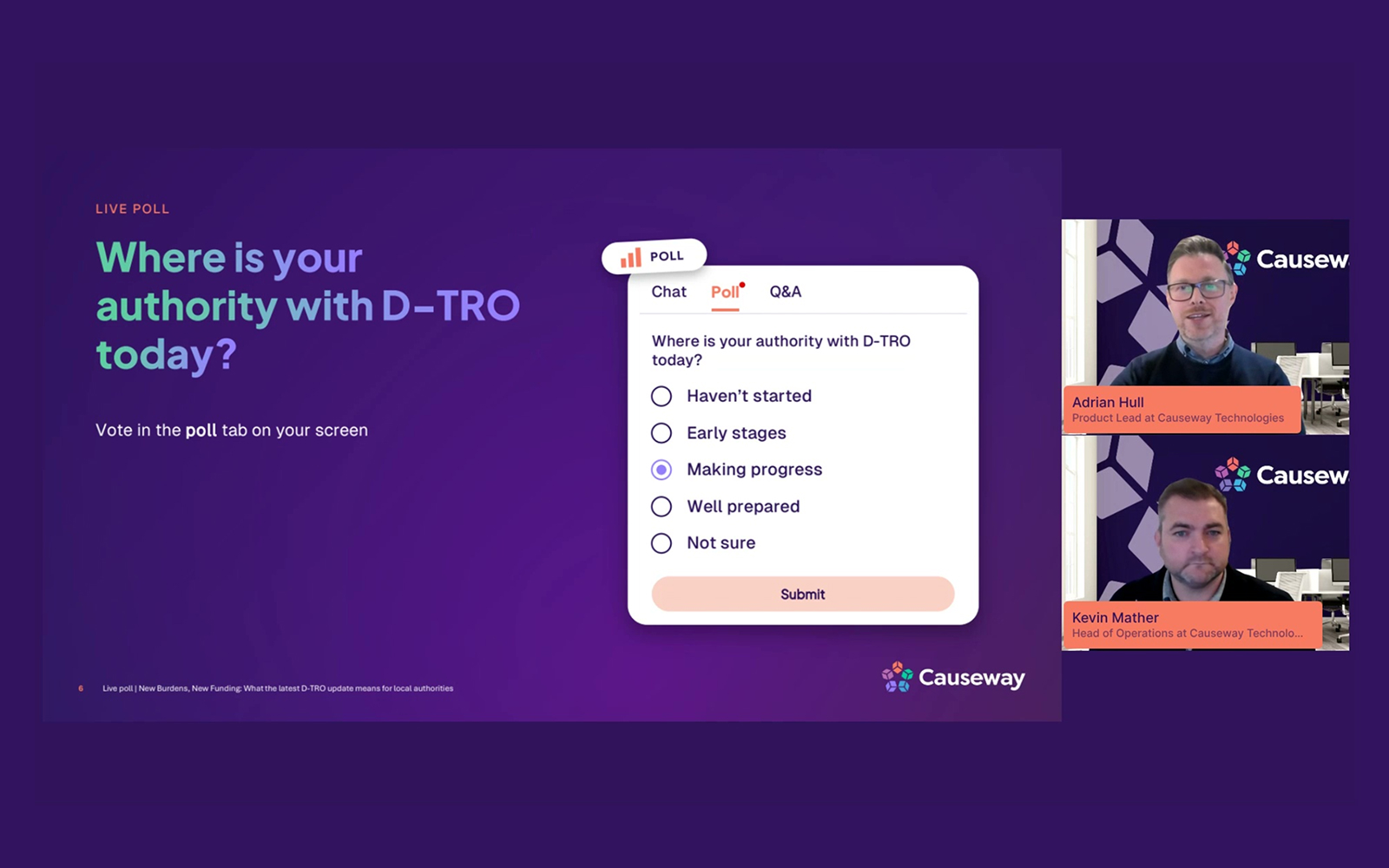
We polled over 200 attendees during the webinar, and the results showed a genuine spread of readiness across the room:
-
Readiness: 57% of respondents said they were making progress or well prepared, while 36% were at the early stages or had not started.
-
Backlog: only 21% knew the exact size of their backlog.
-
DfT questionnaire: 38% had seen or completed it.
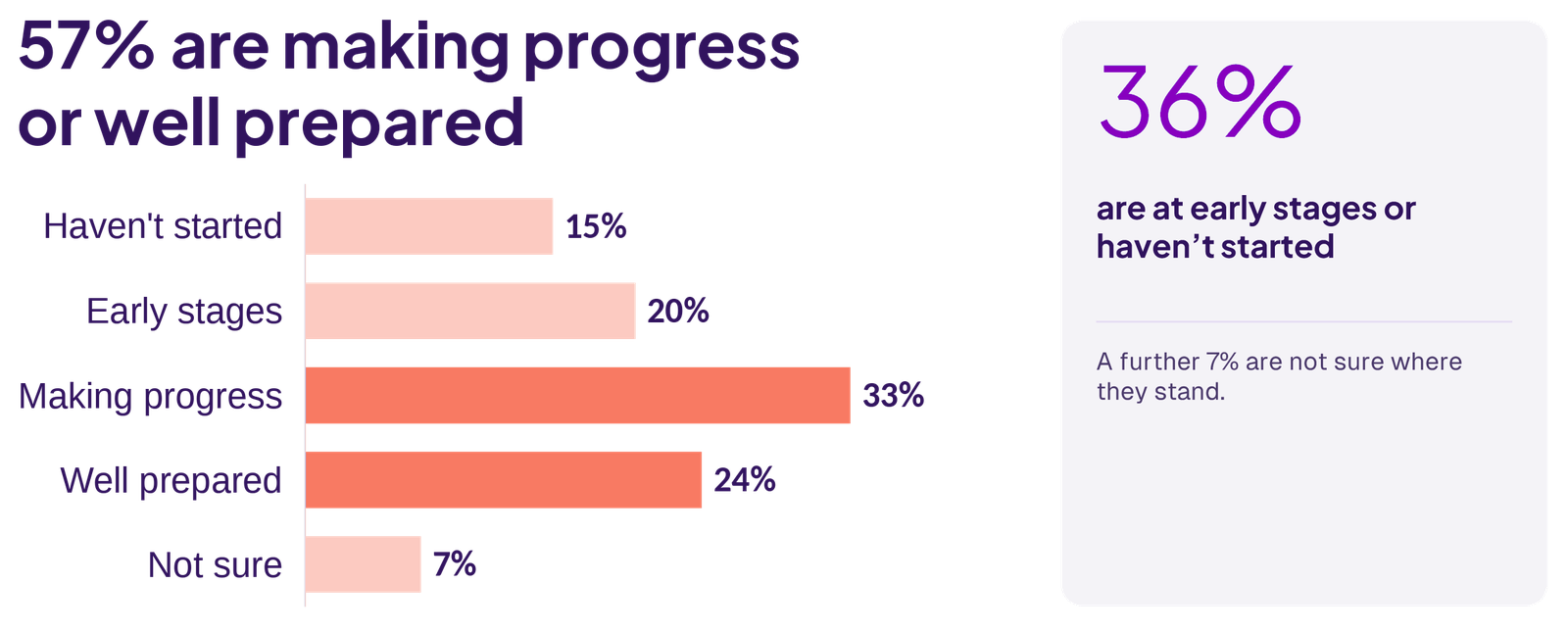 D-TRO readiness stage. Source: live poll, New Burdens, New Funding webinar, 5 November 2026.
On funding, payments are confirmed, but the poll showed how unclear the picture is on the ground:
-
Where it sits: 79% of respondents were not sure where the money sits in their authority.
-
Claimed: only 8% had received and claimed it.
Some authorities have needed to work through their own finance processes to receive it. London boroughs receive money from central government by a different route from authorities outside London, so it is not a case of the money being withheld.
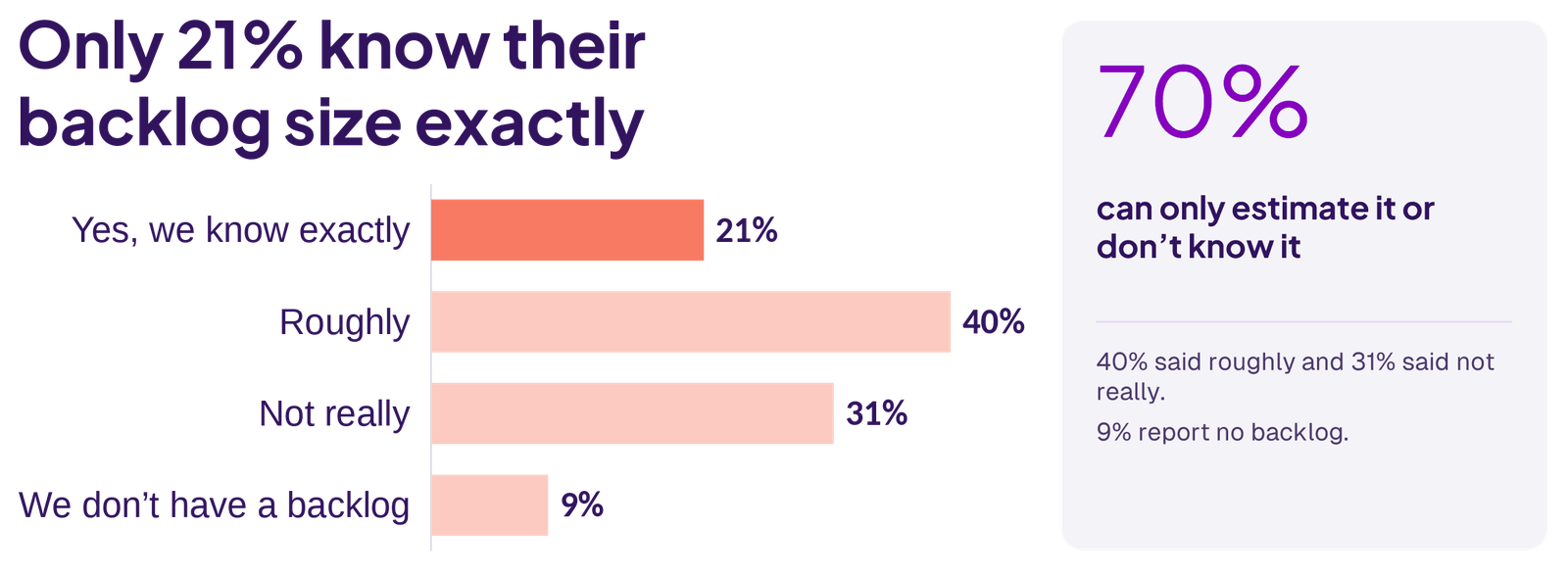
Do you know the size of your traffic order backlog? Source: live poll, New Burdens, New Funding webinar, 5 November 2026.
"Backlog" also needs careful reading. It is not a legal term, and it describes orders that are not digital, not orders that are no longer in force.
"Just because something was made a long time ago doesn't mean it's not an active TRO."
Kevin Mather, Head of TRO Consultancy Operations, Causeway
A three-phase approach: evidence, plan, maintain
The three-phase approach is designed to answer the "so what now?" question that follows any funding announcement. It has been worked through with councils from Bradford to Brent and Newcastle to Kent, starting with everything from a PDF, or shape files to full LiDAR capture of the network.
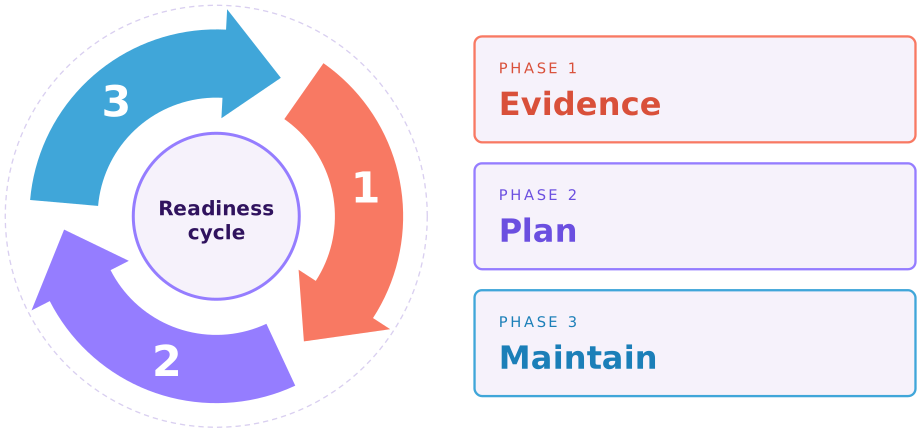
Evidence, plan, maintain: a readiness cycle you repeat, not a one-off fix.
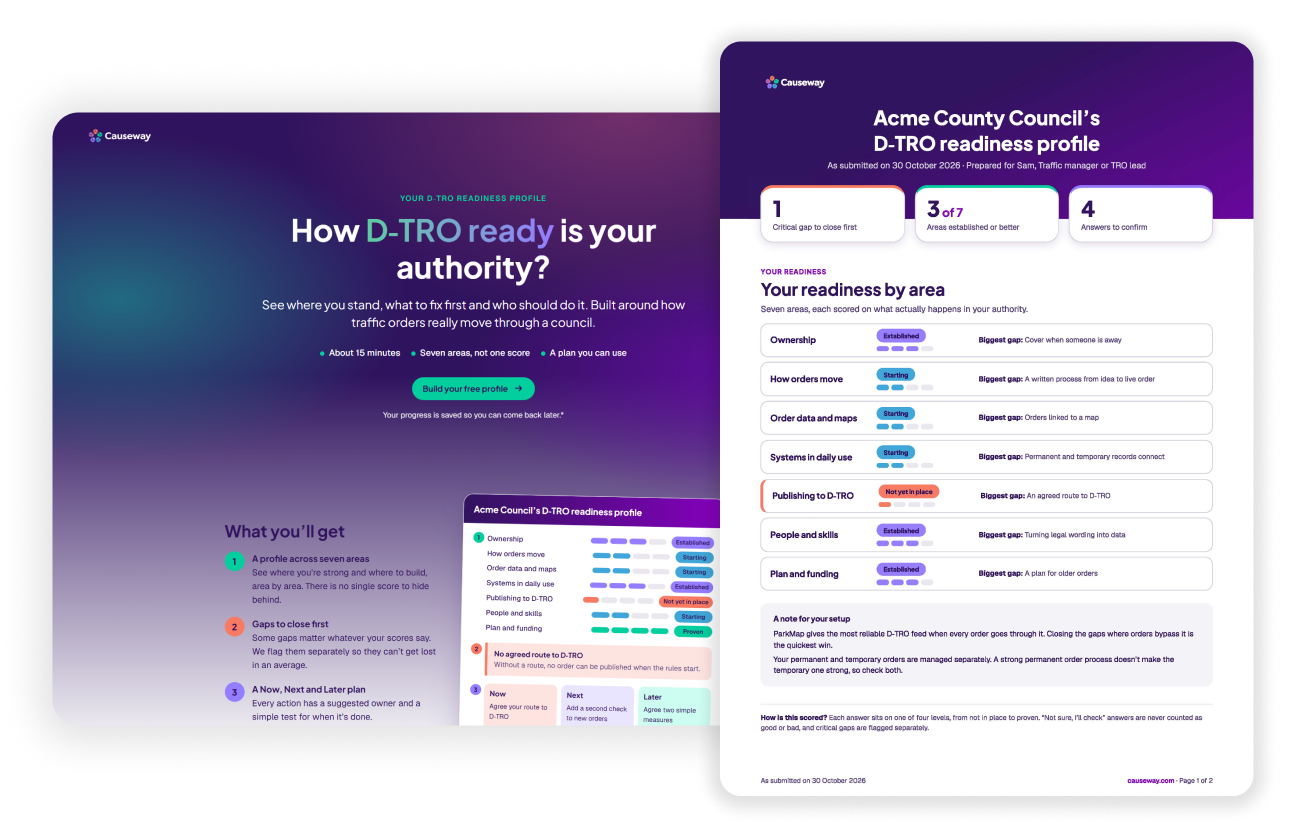
To help authorities take the first step, we've built a tool for you to check your D-TRO readiness. It takes fifteen minutes, works through the three phases, and produces a PDF summary you can use as the starting point for an internal review, a conversation with Causeway or a funding case.
"Don't silo your data or rely on one person. It's about creating a plan with shared responsibilities."
Kevin Mather, Head of TRO Consultancy Operations, Causeway
One view of permanent and temporary orders
D-TRO is not only a permanent orders conversation. Temporary orders, road works, events and emergency closures all fall under the same question: are they being published to D-TRO correctly, and do you know who is doing it on your behalf?
In many authorities, permanent and temporary orders are handled by different teams using different processes, and they are not always talking to each other about whether each side is publishing correctly. The result is two compliance stories inside one council.
"You end up with two separate compliance stories inside the same council, reporting to the same director, and nobody joins all of the dots between them."
Adrian Hull, Product Lead, Traffic Regulation Orders, Causeway
It is worth being clear on where you stand today. We work with authorities on both permanent and temporary orders, so there is one partner to talk to about D-TRO whichever side you are checking. The gap we see is authorities that have checked one side and not the other. If you are unsure what applies to your set-up, talk to us and we will confirm it with you.
What happens next?
The key date to watch is the laying of the regulations, currently expected around February 2027, followed by a lead time of at least 12 weeks before go-live. In the meantime, there are two simple steps you can take now:
-
Take the D-TRO Readiness CheckTake the D-TRO Readiness Check. It takes fifteen minutes and shows where your data and process stand today, so you can plan around your priorities.
-
Talk to our team. Once you have your Readiness Profile, get in touch to go through your results.
Watch the full webinar
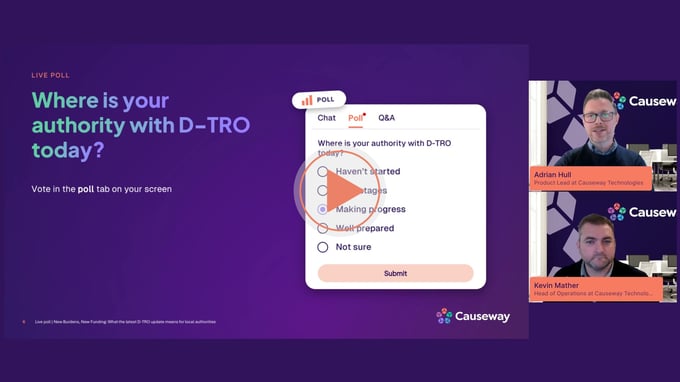
Watch the full webinar recording ondemand here.
FAQs
Questions we received from the audience:
Does D-TRO apply to temporary traffic orders as well as permanent ones?
Yes. The powers behind D-TRO list six types of traffic regulation measure, and section 14 temporary orders and notices are explicitly one of them, alongside permanent orders (section 1), experimental orders (section 9) and special events. If you make anything under section 14, it is squarely in scope.
What does "backlog" mean, and do I have to digitise every historic order?
Backlog is the term DfT's questionnaire uses for orders that are not yet digital. It is not a legal term, and many of those orders are still active.
Is February 2027 the deadline to digitise everything?
No. February 2027 is the expected timing for the regulations to be formalised, and it is not a confirmed date. DfT has committed to at least 12 weeks' notice once they are laid. Go-live is about publishing new orders digitally, not converting everything you already hold.
Are there penalties for not publishing to D-TRO?
No penalty structure has been confirmed publicly, and DfT has not set out fines or sanctions. The practical exposure is operational and reputational: as routing providers, enforcement systems and other authorities work from clean, published data, authorities that are not in that picture miss out.
Has the New Burdens funding reached London boroughs?
London boroughs receive money from central government through a different mechanism from authorities outside London, so the funding is arriving by a different route rather than not arriving. If you are unsure whether it has reached you, speak to your finance team or contact D-TRO Service at d-tro@dft.gov.uk or their website.
Are anti-terrorism traffic orders included in D-TRO?
No. Orders and notices made under section 22C of the 1984 Act, the anti-terrorism traffic power, are carved out of the draft regulations. The reasoning is that an open, machine-readable national dataset should not publish exactly where and when a security-related road closure is happening.
Should I wait for the next-generation permanent order platform before getting compliant?
No. Waiting for a future platform is a delay with risk attached, not a plan. Causeway's permanent order rebuild is in active development with no release date confirmed, and the design intent is no service drop when customers move across, so getting compliant now should not box you in later.
Will D-TRO requirements change over time?
Yes. D-TRO is expected to start with new orders and then evolve. The standard has already moved between versions, and items on the periphery today could become requirements later. That is why a repeating evidence, plan and maintain cycle matters more than a one-off fix.
Where should I start with D-TRO?
Start with a baseline: check the health of your order data, how many orders are already digital, and who owns D-TRO in your authority. Causeway’s D-TRO Readiness Check is a quick way to do this and shows where to focus first.