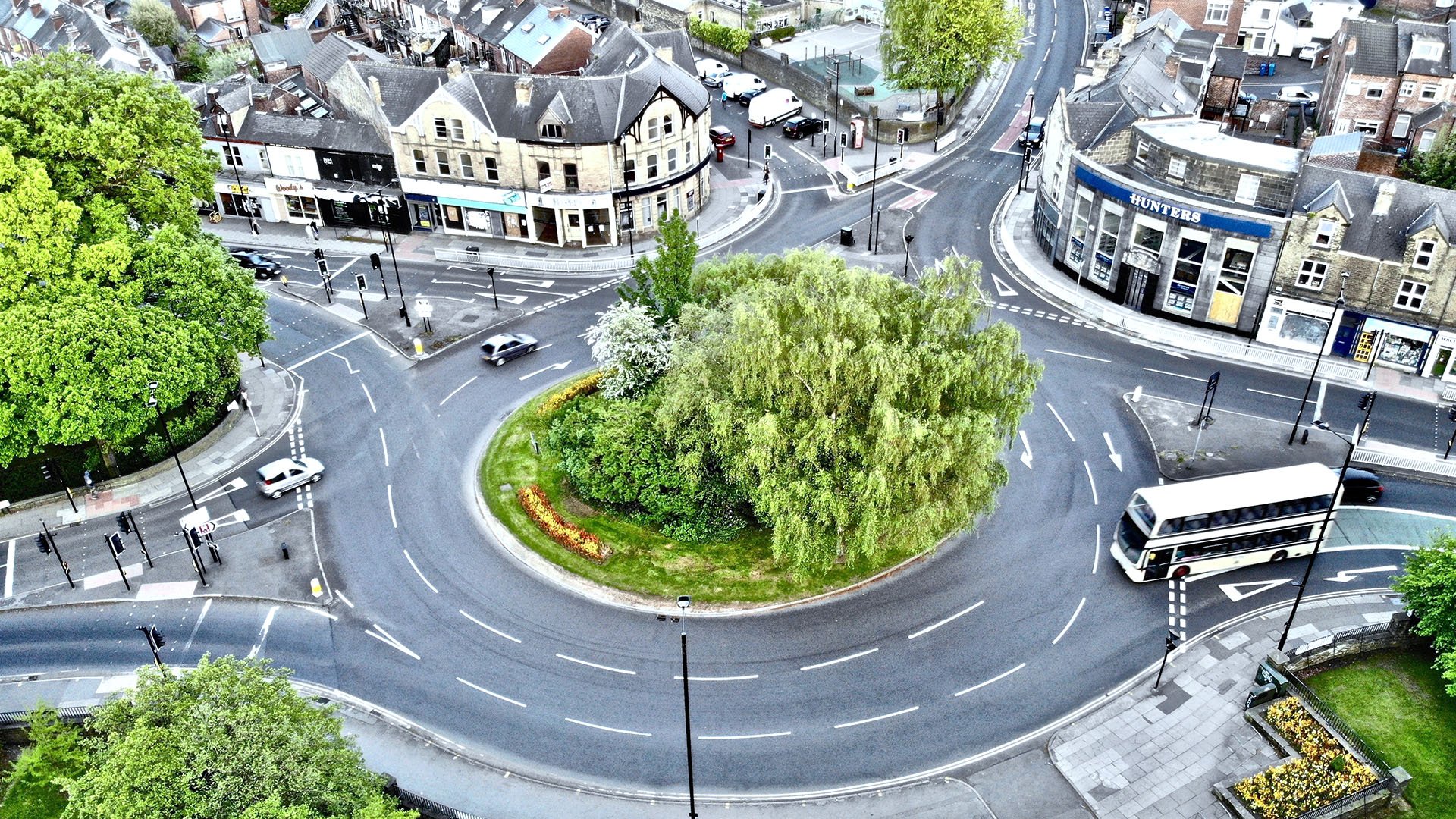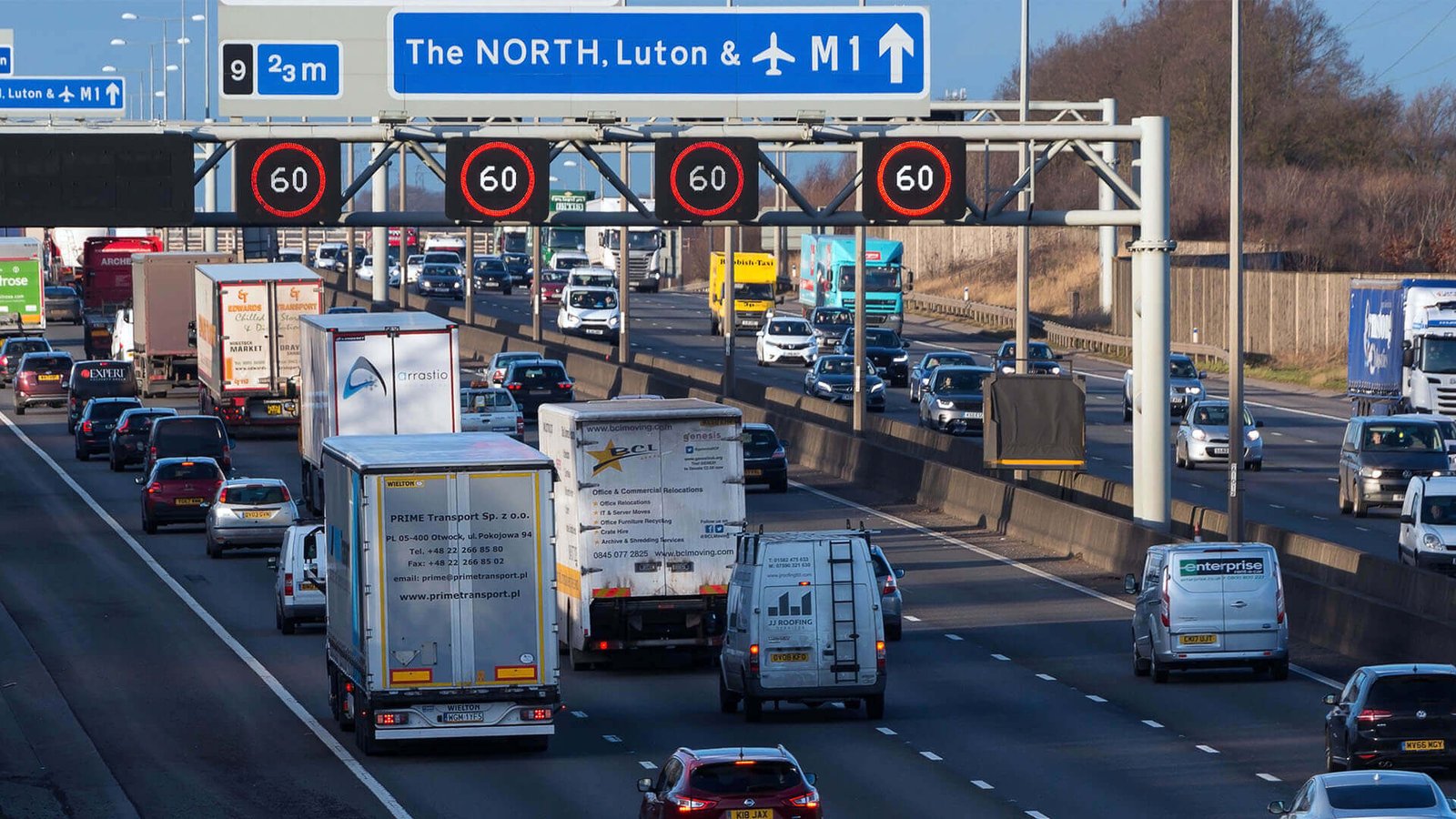
Road markings and traffic signs are often treated as a formality, yet they're one of the more consequential parts of highway design. The risk of error isn't just financial: it can also contribute to traffic collisions and casualties. Around 1,500 deaths and 30,000 serious injuries occur on UK roads every year[1] with 50% of these at or within 20 metres of a junction[2].
Simon Morgan, chair of both the IHE Traffic Sign Panel and UK traffic sign standards at BSI, and senior consultant at Causeway Technologies, spelt this out at a recent industry discussion: a sign on a busy motorway is seen by far more people every day than the world’s most visited artwork. Unlike art, though, a sign has a job to do; keeping the network safe and usable. That's why the detail has to be right first time, and why the software and training behind it matter.
Here's what has changed in the standards and how design software now takes on much of the checking.
What's changed in road sign and marking standards?
BS EN 13422:2019 (traffic cones and cylinders, most recently revised 31 March 2025) has a new UK annex with additional classes of retroreflective material, necessary for TSRGD compliance, along with updated advice on the labelling of cones.
BS EN 12899-1:2007 (fixed vertical road traffic signs, most recently updated 31 March 2025) has been updated with a corrigendum addressing two important issues:
-
The colour light green (used on low emission zone signage, emergency tunnel signs, and airport emergency-rendezvous directional signs) has historically varied significantly across the country. The corrigendum defines a new "colour box" within the CIE colour space, giving manufacturers an achievable target and ensuring consistency.
-
Manufacturers are now encouraged to label the back of a sign if an overlay film has been used (UV, anti-dew, or anti-graffiti) which matters practically, since it determines which solvents and cleaning materials are safe to use.
Regulatory movement: Wales has already amended TSRGD to allow side-road zebra crossings without standard beacons and zig-zag lines; England's Better Connected strategy (published April) proposes the same, requiring its own TSRGD amendment in due course.
The English Devolution and Community Empowerment Act (in force since April) will extend footway-parking enforcement powers to strategic authorities outside London, once a statutory instrument is published to bring it into effect, with a further SI promised to allow authorities to use current civil enforcement powers to deal with serious obstruction of footways.
Where judgement ends and software like SignPlot takes over
Sign illumination is a good example of where the rules stop. TSRGD sets out the circumstances in which a sign must be electrically lit. Where it doesn't specify, the decision is left to the highway authority to make safely, and a sign without electrical lighting can still meet TSRGD through retroreflective materials. The same applies to structural economy and sustainability: choosing between a steel circular post and a passively safe arrangement, or between a large concrete base and planted footings, is a trade-off between compliance, carbon, and cost and it's one that benefits from experience and training as much as calculation.
TSRGD says what's allowed. The standards say how it must perform. The Traffic Signs Manual says how to apply both. None of them tells you what to put on the post. Much of the mechanical work behind these judgement calls such as sign layout, choice of lettering size, wind-load calculations, structural section-checking has moved out of manual reference-tables into design software that runs the check automatically. Tools like Causeway's SignPlot, for instance, will step through TSM Chapter 7 spacing and x-height rules for a directional sign based on traffic speed and destination count, and SignLoad will run both the simple and detailed BS EN 1991 wind-load methods to find the smallest compliant post section without the need of manual calculations where errors occur and rework might be needed.
It's a similar story on the road marking side. Junction and crossing layouts built as associative objects (rather than static polylines) can be updated automatically if the underlying road geometry changes. This creates flexibility in road marking design as a lot of rework historically came not from bad initial design, but from a scheme changing after the marking was already drawn.
The real cost of getting signs and markings wrong
None of this replaces engineering judgement; automation handles compliance and the arithmetic, but the trade-off decisions still sit with the engineer. What it removes is the category of "hidden cost" that has nothing to do with judgement at all: rework from manual spacing errors, over-specified foundations because nobody ran the detailed wind-load method, or signs that need replacing because a compliance check was missed under time pressure.
And costs to the wider community can be reduced. Surveys in the past have indicated significant wasted mileage from poor signing, and bridge strikes (around 1,600 recorded incidents a year)[3] remain a stubborn reminder of what's at stake when signing and routing don't line up. Closing that gap is as much about the tools engineers use day to day as it is about the standards themselves.
Get in touch
If you'd like to see SignPlot, SignLoad, or Causeway Line in action against one of your own live projects, the Causeway Technologies design team can walk through it with you. Get in touch at solutions@causeway.com.
References
[1] DfT, Reported Road Casualties Great Britain, final results: 2025 (published 30 July 2026)
https://www.gov.uk/government/statistics/reported-road-casualties-great-britain-final-results-2025
[2] DfT, RRCGB 2025 — Road type and environment (same release, published 30 July 2026) https://www.gov.uk/government/statistics/reported-road-casualties-great-britain-final-results-2025/rrcgb-2025-road-type-and-environment
[3] Network Rail, The risk of bridge strikes https://www.networkrail.co.uk/our-work/looking-after-the-railway/bridges-tunnels-and-viaducts/the-risk-of-bridge-strikes/