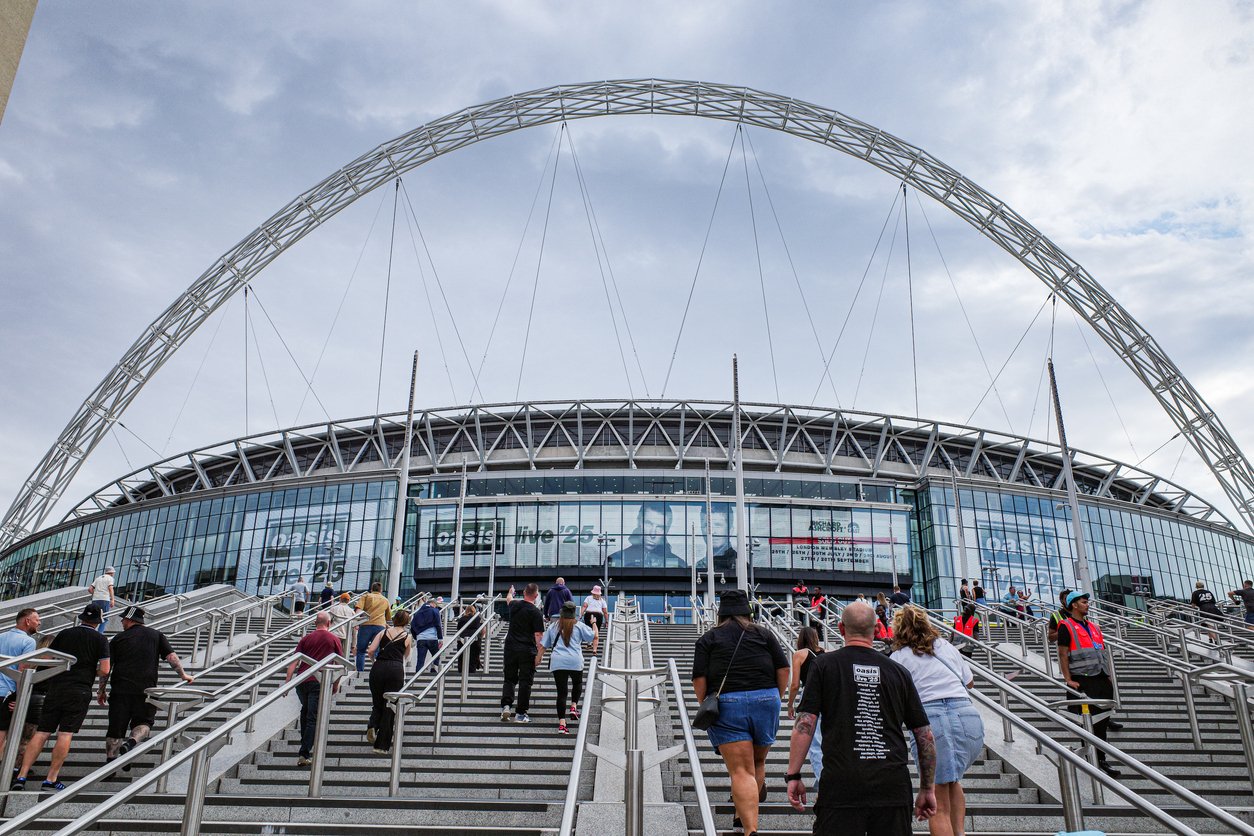
London Borough of Brent is home to Wembley Stadium and Wembley Arena and serves more than 350,000 residents across a large, busy road network. The council's Healthy Streets and Parking service manages everything from traffic management orders (TMOs) and controlled parking zones (CPZs) to school streets, active travel schemes and parking enforcement.
Brent's close to 3,000 traffic orders were held on a legacy paper-based system, scanned to PDF, with many orders linked to one another. Finding the right order, or changing one without affecting a related order, was a slow and risky process, and residents had no easy way to check what restrictions applied on a given street.
Brent London Borough Council selected Causeway ParkMap and CausewayOne Network through the G-Cloud 14 framework and is now live with public consultation on its new Traffweb web page. With team training starting shortly, Brent expects the move to cut the time, risk and resourcing its old paper-based process carried, well ahead of the Department for Transport's digital traffic order (D-TRO) deadline.
The Challenge
Brent's traffic orders were managed through what Sandor Fazekas, Head of Healthy Streets and Parking at Brent Council, calls a legacy process, paper-based in practice, even once it moved onto a computer. Orders were scanned and filed as PDFs rather than held as structured digital records, and many were linked as parent and related orders, so a change to one could affect others that weren't immediately visible.
That complexity carried real risk. The team also handled a steady stream of freedom of information (FOI) and environmental information requests (EIR), alongside queries from ward councillors about restrictions in their area. This approach meant finding the information needed to respond could be slow and time-consuming.
It wasn't only the big orders. Brent makes roughly 150 short sections of yellow line a year, plus well over 100 disabled bay changes and revocations: small individually, but time-consuming at that volume through traditional methods.
There was a resident-facing cost too. Wembley Stadium and Wembley Arena draw large numbers of visitors, and unclear parking restrictions meant more drivers circling for a space, adding to congestion on an already busy network.
"The more complex a process is, the more likely it is that errors will happen. We wanted to find a way that's far more efficient than what we were doing."
— Sandor Fazekas, Head of Healthy Streets and Parking, Brent Council
The Solution
The Department for Transport's move toward mandatory digital traffic orders (D-TRO) was one driver behind Brent's decision, but Sandor is clear it wasn't the only one. Efficiency, risk reduction and a better resident experience mattered just as much, and the council had been looking to modernise this part of the service for years.
Brent ran a formal procurement, weighing providers against each other, and selected CausewayOne Network and ParkMap through the G-Cloud 14 framework — a route the council found straightforward once the decision was made.
"We wanted to find a way that's far more efficient than what we were doing. It's not just about
D-TRO. There's a lot more to it than that."— Sandor Fazekas, Head of Healthy Streets and Parking, Brent Council
The rollout splits by scale: routine changes, such as short sections and disabled bay orders, are managed directly through Traffweb, while larger CPZ schemes link Traffweb with the council’s own “Have Your Say” consultation page, built with its communications and engagement teams.Brent also commissioned a full network survey, so every legal traffic order can be matched to what's actually on the ground, work Sandor says has left the council in its strongest position yet for keeping its legal documents aligned with reality.
What happens next
Brent's first live step is already behind it. Public consultation on its newly digitised traffic orders is live and running over three weeks as of November 2026, with training for the full team wrapping up shortly after.
The time savings and reporting Sandor is really after are still ahead, but the direction is already clear. The network survey and the new map-based solution are set to harmonise, modernise and centralise what were over 3,000 separate legacy orders into just four borough-wide parent orders, each with its own map-based schedule, making future amendments far easier to manage.
Key outcomes expected include:
-
Brings together close to 3,000 traffic orders on one digital, map-based solution, replacing a paper-based, PDF-scanned system
-
Aims to cut the time and risk involved in creating and amending linked traffic orders
-
Faster responses expected to FOI, EIR and ward councillor requests for traffic order and parking information
-
A clearer, public-facing way for residents to check restrictions and comment on proposed changes
-
Survey-accurate network data expected to feed into Asset Strategy for more precise asset planning
-
Positions Brent ahead of boroughs still working toward D-TRO compliance
"We've got systems that align with our highways and traffic management systems, and there's a real opportunity for better cohesion across all of our network operations, and better use of data."
— Sandor Fazekas, Head of Healthy Streets and Parking, Brent Council
Any council managing a similar backlog of linked, paper-based traffic orders faces the same choice Brent did: wait for D-TRO to force the issue, or get ahead of it now. Speak to our team to find out how Causeway can help you consolidate your own orders.