D-TRO legislation laid: mandatory from 11 February 2027
2:55

It's official. The legislation that makes Digital Traffic Regulation Orders (D-TRO) mandatory has been laid, and the 12-week countdown to go-live on 11 February 2027 has begun.

After years of webinars, conferences and newsletters, the Department for Transport (DfT) put it simply: "it finally is actually happening."

What's changed

DfT confirmed the date at the Transport Technology Forum on 17 November 2026. The statutory instrument has now been laid before Parliament, which starts the 12 weeks' notice DfT promised the sector.

  • 19 November 2026: the 12-week lead time started

  • 11 February 2027: D-TRO becomes a legal requirement for traffic authorities in England

DfT says over 80 authorities already submit orders to the D-TRO service voluntarily. But without legislation, the service could never reach full coverage. From February, it will.


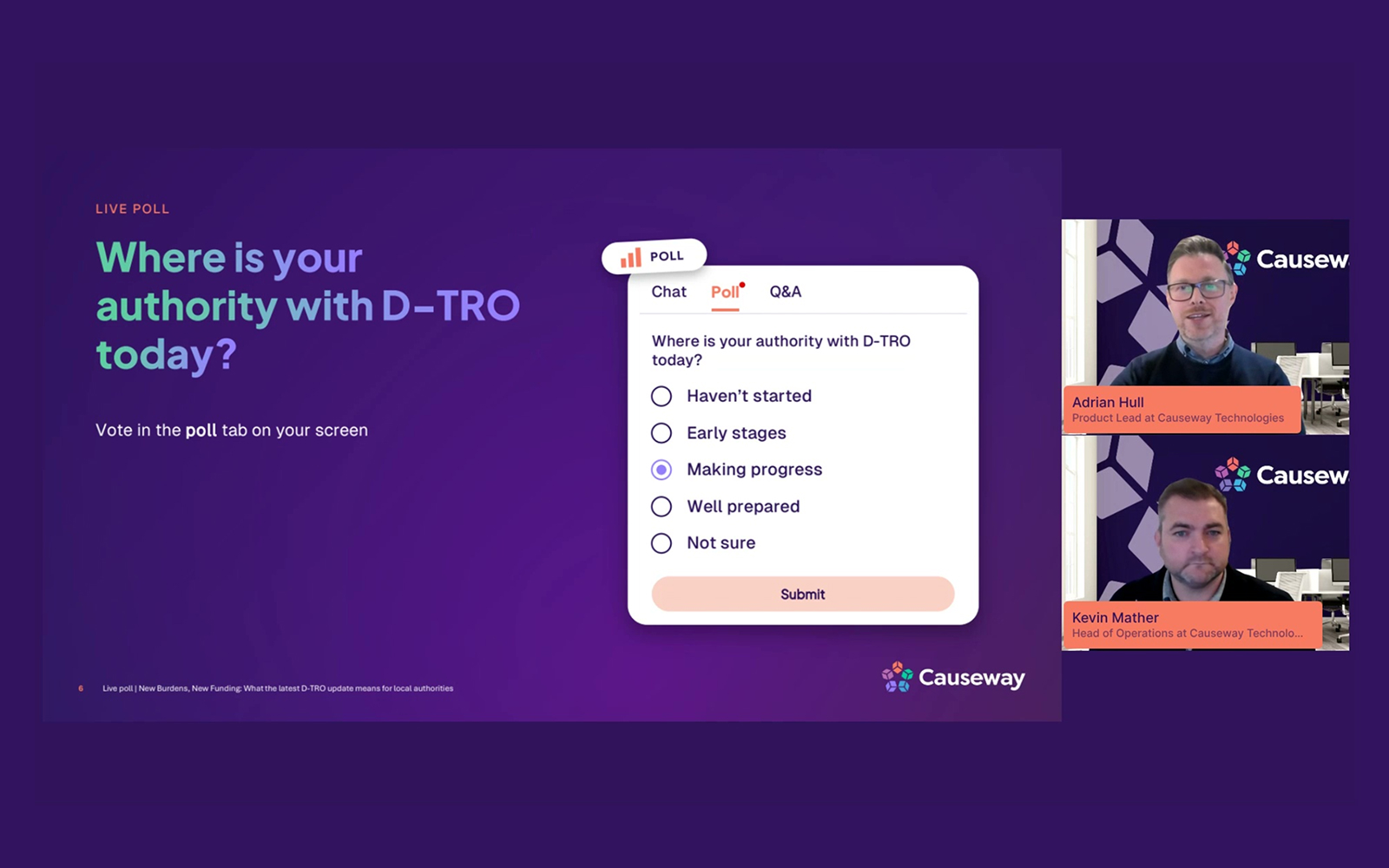
Paul Chandler, Head of Traffic Management Digital Services at the Department for Transport, announces that the D-TRO legislation has been laid. Source: Department for Transport.

Watch DfT's D-TRO announcement

What's changing for traffic teams

From 11 February 2027, every new traffic regulation order in England must go into the D-TRO service. That covers both permanent orders, such as speed limits and parking restrictions, and temporary orders (TTROs), such as road closures.

For data users such as sat navs, fleets and connected vehicles, this gives a complete, up-to-date picture of new restrictions and closures across England for the first time.

DfT is clear this is only the start. Its next goals are to bring in the backlog of existing orders, then data beyond traffic orders, such as yellow box junctions and bridge heights.

What it means for you

DfT's message depends on where you are today:

  • Already submitting all your orders: nothing changes. Carry on as you are.

  • Submitting traffic orders: make sure every team that makes orders has a plan.

  • Buying or setting up software: keep going and aim to finish well before February. Speak to your digital solution provider about the typical timeline to implement.

  • Not started yet: 12 weeks is a short window to choose a route, change processes, train teams and test submissions, so start now.

The legislation also helps teams that have struggled to win internal support. As DfT put it, once D-TRO is law, "you'll have that support from the DfT and from government to get your orders live, digitalised, and into the service."

Next step: take the D-TRO Readiness Check

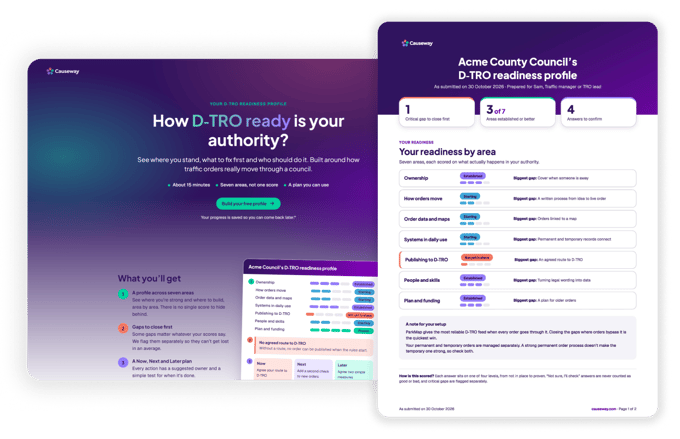
The quickest way to see where you stand is the D-TRO Readiness Check. It's completely free and gives you a Readiness Profile with:

  • your critical gaps

  • your readiness by area

  • your top three actions

  • a Now, Next, Later plan

DTRO readiness profile acme nbnfFrequently asked questions

Yes. In September 2026, DfT confirmed a one-off, flat payment of £37,000 for every local authority, around £5.9 million in total.

The money is not ring-fenced, so traffic teams may need to agree with their finance team how to use it.

Most authorities outside London received it in mid-October 2026. London boroughs and authorities in a mayoral area receive it through their regional body.

From 11 February 2027, every new traffic regulation order in England must go into the D-TRO service. That includes permanent orders, such as speed limits and parking restrictions, and temporary orders (TTROs), such as road closures.

Historic orders are not part of the requirement yet. However, DfT plans to bring in the backlog of existing orders next, then other data such as yellow box junctions and bridge heights.

If your authority already submits all its orders to the D-TRO service, nothing changes. DfT's advice is to carry on as you are.

Take the D-TRO Readiness Check. It's completely free and gives you a Readiness Profile with your critical gaps, your readiness by area, your top three actions and a Now, Next, Later plan.

If you want help to understand your results, our team can help.

That depends on your starting point.

If you're already submitting all your orders, DfT is clear that nothing changes.

If you're mid-procurement or setting up software, keep going and get a realistic timeline from your provider.

If you haven't started, 12 weeks is tight. You'll need to choose a route, adapt your processes, train your teams and test submissions, so it's worth starting now.

D-TRO becomes a legal requirement on 11 February 2027, but DfT has not yet set out what happens to authorities that miss the date. We're in regular contact with DfT and will update this page as soon as there's more to share. For now, the best step is to understand where your gaps are. The D-TRO Readiness Check will show you what to prioritise first.


Not always. The question is whether your current system can create orders in the D-TRO data format and submit them to the D-TRO service.

Ask your provider three things: can it submit both permanent and temporary orders, can it do this today, and if not, when? Check this for every team that makes orders, because permanent and temporary orders are often handled in different systems.

It varies. The main factors are your council's procurement route, how many types of order you make, how many teams are involved and how much training they need.

Ask your digital solution provider for their typical setup time and plan to finish well before 11 February 2027. That leaves time to test real submissions before the requirement starts.

Let’s build the future together

Discover how we can transform your business, making every project flow and the industry more sustainable.